


Quick Facts
Geography
Early Inhabitants
History
Economy
Famous People
Sights to See
Bird and Flower
Books Related To Missouri

Geography and Landforms:
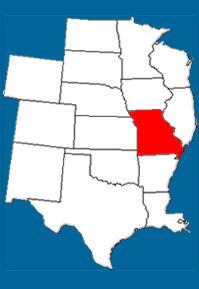
Missouri is bordered by Iowa on the north and by Arkansas and Tennessee on the south. Illinois, Kentucky and Tennessee border the state on the east, and Nebraska, Kansas and Oklahoma form the western border. The highest point in Missouri is Taum Sauk Mountain at 1772 feet. |
 History:
Father Jacques Marquette and Louis Joliet of France were the first white people to see the Missouri River in 1673. In 1682, Rene-Robert Cavelier traveled down the Mississippi River and claimed the entire Mississippi Valley for France. This land, that included Missouri, was named Louisiana after King Louis XIV. |
 Economy:
Missouri's economy is dominated by industry. Aerospace and transportation equipment are the main manufactures; food products, chemicals, printing and publishing, machinery, fabricated metals, and electrical equipment are also important. St. Louis is an important center for the manufacture of metals and chemicals. In Kansas City, long a leading market for livestock and wheat, the manufacture of vending machines and of cars and trucks are leading industries.
|
 First Inhabitants:
Nomadic hunters were present in the area we now call Missouri perhaps as early as 12,000 years ago. Divided into small bands, they ranged widely over the land, hunting many now-extinct animals. The next period, called Archaic, lasted from about 10,000 to 3,000 years ago. In this period, these hunters used woven baskets and highly specialized stone tools. Later on, the Woodland culture saw the introduction of pottery and agriculture. Southeastern Missouri contains many artifacts and relics of the culture called Mississippians or Mound Builders, a village society that started about AD 800.
|
Books Related To MissouriThe Adventures of Tom Sawyer - Mark Twain Aunt Minnie McGranahan - Mary Skillings Prigger Caught in the Act - Joan Lowery Nixon A Girl Named Dan - Dandi Daley Mackall The Haunted Cabin Mystery - Gertrude Chandler Warner Little Town in the Ozarks - Roger Macbride S is for Show Me:A Missouri Alphabet - Judy Young The Seven Wonders of Sassafras Springs - Betty Birney |
Famous Citizens:
|
| Capital: | Jefferson City |
| Entered Union: | August 10, 1821 |
| Population: | 6,063,589 |
| Area | 69,704 |
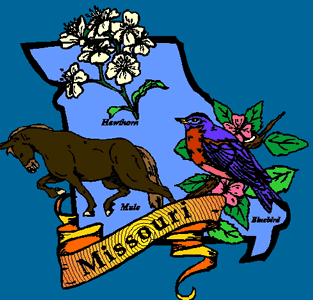
| Bird | Bluebird |
| Flower | Hawthorn |
| Nickname: | Show Me State |
| Governor | Jay Nixon |
Places to Visit in Missouri: (Click the links to learn more.)
|